


Mobility: Move well to live well
- Noah Bassil
- Mar 18, 2024
- 6 min read


In my earlier post I wrote about the sickness-wellness-fitness continuum. The sickness to fitness continuum is a method and it is important to have a tool kit to move away from sickness past wellness too fitness. Using the method, the idea is to move as far away from sickness and as close to wellness as possible. So far, I’ve indicated that nutrition is one crucial component of constituting wellness. Strength training and conditioning (S&C) are two others. Another component of fitness is mobility. Mobility is the capability to move through one’s life with purpose and confidence (and pain free), and is often thought of something that results from, or is the outcome of, living well. The opposite of being fit and healthy is being unfit, unhealthy and also being immobile. And, on one level mobility is something that comes with other forms of exercise. On, another, it is something that must be trained in its own right as well. I have been, and have met, fit and healthy people who struggle with mobility. This article focuses attention on why it is so important to work on mobility and how to do it.
Believe it or not, these days, mobility is as important to me as lifting weights or cardio workouts. Mobility is often neglected by many “gym bros”. This is less the case today than it was in the 1980s and 1990s. Functional fitness has changed this. Any serious S&C gym that does not program mobility as a part of every workout, and emphasise the importance of good mobility, is not a serious S&C gym. Coupled with functional movements performed to full range of motion, mobility training increases the capacity to move the body well and enhances joint health and improves posture. As we age, the importance of mobility training increases. Today, I do as much mobility as I train in the gym. Maybe, even more.
Just as almost everything that is supposedly new has a prior version, mobility dates back in time as well. Ancient cultures were very aware of training mobility. Today, yoga studios and classes span the globe. Yoga dates back over 5,000 years and is one clear example of a mobility centred practice that pre-dates modern exercise science. Mobility is not new. Not by any means, instead we can say, there is a renewed understanding of how much it matters as part of good health and wellbeing.
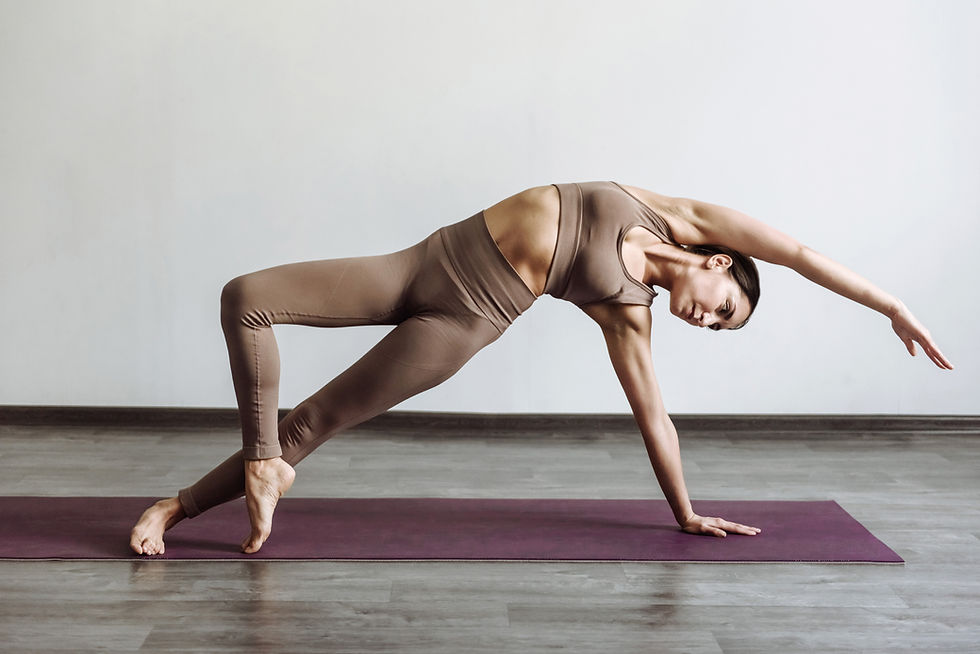
What is Mobility?
In the first section of this piece, it was said that mobility is the ability to move through one’s daily activities with confidence, purpose and without pain. In these terms, one cannot be “well” without mobility. Numerous studies have shown that flexibility and mobility improve well being. One study found that regular stretching improved mental well-being. Another study concluded that 30 minutes of Yoga 5 times a week lowered blood pressure. All these studies are further evidence of the power of exercise to improve people’s lives. Whether weight training, group fitness cardio classes or yoga, the science is irrefutable, exercise is a key component of a life well lived. And, more so, one thing we have to constantly keep in mind is that while we separate exercise into different modalities, the reality is that they are not just complementary, they are interdependent.

Mobility shares some similarities with flexibility. Flexibility refers to muscles’ ability to lengthen passively. Mobility is the ability of a joint to move through the full range of motion. Muscles and joints work together to ensure we move properly.
Tight muscles will hinder the joint’s capacity to actively move through the full range of motion and could lead to postural and to joint incapacity. Conversely, unhealthy joints impact on a person’s capacity to move, adversely effecting exercise, movement and general enjoyment of life. As we well and truly know, a sedentary lifestyle is the cause of many serious physical and mental health problems. Working on both one’s range of motion and muscle flexibility are without doubt essential components of both forging and protecting the conditions for healthy living.
Improving Mobility and Flexibility
The most effective way to improve mobility and flexibility is by regular exercise that targets both lengthening muscles and moving joints through their full range of motion.
Flexibility is best improved by performing static stretches. Dynamic movements and stretches are best for attaining better mobility. Weight training with correct form and performing each exercise to the full range will provide benefits beyond building bigger and stronger muscles. Better posture, joint health and muscle length are also outcomes of performing resistance exercises correctly.
As we age, mobility and flexibility training increases in importance. Not only is there an increase in the amount of time we sit, i.e. being sedentary, the way we’re sitting has changed as computers and mobile phones have forced more people to hunch. It is estimated the average Australian sits for 8-10 hours a day. That’s a lot, because most people sleep about 8-10 hours a day meaning that for the average Australian, the amount of non-sleeping, non-sitting time is somewhere between 4 and 8 hours a day. Most people then, in Australia, a country with lots of outdoor spaces, great climate, a country considered sporty and active, are sitting more hours than they are upright. The impact on posture and on mobility, especially hip mobility, can be very severe.
Mobility exercises, about 15 minutes of dynamic and static stretching can negate the worst of the adverse effects of excessive sitting and inactivity.
Here is a list of 7 hip mobility exercises that can help restore mobility, help with discomfort and pain, and get you to move better. If your mobility problems are serious, you’re in a lot of pain or have an injury, you should consult a health professional before doing any exercise even mobility movements. Otherwise, try these 7 that are also recommended by the International Sport Science Association (ISSA): and
1. Lunge with pelvic pressure:
From a lunge position, apply pressure downward from the pelvis as if it’s trying to touch the ground. This will open up the hips for an amazing hip flexor stretch.
Hold this position for 20 seconds, and shift to the other leg.
2. Sitting piriformis stretch:
In this stretch, you begin seated with your legs extended out in front of you. Cross your left leg over your right leg. Then, place your right elbow against your left thigh and twist your torso to look behind you.
Hold this for 20 seconds, and then switch. This stretch will help with your exterior hip muscles.
3. Butterfly Stretch:
Here, you will sit on the ground, and place the soles of your feet together. Bring them in as close to your body as feels comfortable, and gently press your knees to the ground.
This will open up the muscles necessary for adduction and abduction that we mentioned earlier.
4. Front Pelvic Roll:
For this, take your foam roller and lay it on the ground. Then, lay on the foam roller so it’s perpendicular to your body, placing your pelvis on the roller itself. Using your hands and arms, roll your body back and forth over the foam roller.
Make sure to roll it all the way up to your stomach, and all the way down to your thighs. Do this for 60 seconds, take a break, and then repeat.
5. Side Pelvic Roll (Foam Rolling)
This will be the same as above, but instead of facing the ground, you will face to the side. The goal here is to get the same back and forth roll on the exterior muscles and joints of the hip.
Do this for 60 seconds, take a break, and then repeat.
6. Frog Stretch
Start on elbows and knees, bringing your knees as far apart as is comfortable.
Roll back and forth in that position.
Keep the balls of your feet on the ground, toes pointed.
Do this for 60 seconds, take a break, and then repeat.
7. Deep Squat
Place feet hips width apart, with toes slightly turned out. Chest up, shoulders back, abs turned on (i.e. tensed), start to bring the bum down as if lowering to a seat, knees tracking over the feet until the hips are parallel with the knees (or below parallel if you can) and hold this position for 60 secs. Take a break, and then repeat.
For more information about mobility see https://www.issaonline.com/blog/post/mobility-training-your-new-pre-workout
Barbend has loads of useful exercises, tips, information about mobility https://barbend.com/best-mobility-exercises/
As does BoxRox https://www.boxrox.com/8-stretching-exercises-to-improve-mobility-recovery-you-can-do-at-home/
Add mobility training to your weekly schedule of weightlifting and cardio, either before and after workout sessions, or on its own. I prefer both, and as someone now in their mid 50s, mobility training has become a crucial part of my personal program to reduce injury risks, improve performance, look, feel and move better. I aim for 30 mins of mobility a day above and beyond any time I spend in the gym. That’s a lot. Try for 10 mins a day. I hope you give it a go and it does the same for you. Until next time, Be Herculean.


Comments